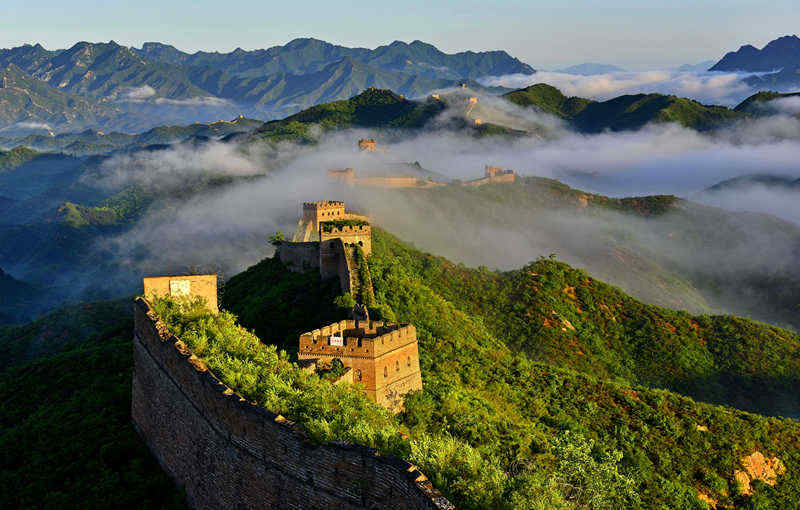
Jinshanling Great Wall
Introduction
The Jinshanling Great Wall is a significant section of the Great Wall of China, situated in Luanping county, Hebei province, about 130 kilometers from Beijing. Built under the direction of General Xu Da (1332-85) in 1368 during the Ming Dynasty (1368-1644), the Jinshanling section is celebrated for its exceptional preservation and historical significance. It serves as a striking testament to ancient Chinese military architecture and has become a renowned destination for photography enthusiasts due to its stunning landscapes. Spanning 10.5 kilometers, this section of the Great Wall begins at the Gubeikou Pass in the west and ends at the Wangjing Tower in the east. The Jinshanling Great Wall is famed for its architectural diversity, showcasing unique construction materials, tier numbers, and roof patterns.
History
The history of the Jinshanling Great Wall dates back to the Ming Dynasty (1368-1644), which began its construction in 1368. General Xu Da, a prominent military figure of the era, oversaw its construction as part of a broader effort to fortify China's northern borders against invasions. The Ming Dynasty (1368-1644) was a period marked by major architectural and military advancements, and the Great Wall was a central component of these efforts. Jinshanling, like other sections of the Great Wall, was strategically positioned to provide defense and control over the surrounding region. Over the years, it played a crucial role in the military defense system, reflecting the ingenuity and strategic foresight of its builders. Its historical significance is further underscored by its inclusion in the UNESCO World Heritage List, symbolizing its global cultural importance.
Architecture
The architecture of the Jinshanling Great Wall is distinguished by its intricate design and robust construction. This section of the Great Wall features various structural elements, including five passes, three beacon towers, and 67 watchtowers. Each watchtower was constructed with unique materials and designs, incorporating differing tiers and roof patterns. This architectural diversity not only served practical defensive purposes but also added to the aesthetic appeal of the structure.
Preservation
As one of the most well-preserved parts of the Great Wall, the Jinshanling section has been the focus of extensive preservation efforts. Recognized as a national foremost protected cultural heritage site, it has undergone numerous restoration projects aimed at maintaining its structural integrity and historical authenticity. Conservation efforts have been guided by principles that balance the need to protect the wall's historical features while making it accessible to visitors. These measures are crucial in ensuring that the wall remains intact for future generations to study and appreciate. The preservation of the Jinshanling Great Wall is vital not only for its historical value but also for its role as a cultural icon. Its status as a national 5A-level tourist attraction underscores its significance and the importance of ongoing preservation efforts.
Tourism
The Jinshanling Great Wall serves as a prominent tourist attraction in China, drawing visitors from around the globe. One of the main highlights for tourists visiting Jinshanling is its spectacular scenery, which is especially appealing to photography enthusiasts. The wall stretches over 10.5 kilometers, meandering through a picturesque landscape that changes with the seasons, offering new photographic opportunities with each visit.
Visitors can experience the Jinshanling Great Wall through a variety of outdoor activities. Hiking is a popular way to experience the wall's beauty, allowing tourists to traverse its length and appreciate its architectural diversity. The hike from Gubeikou Pass to Wangjing Tower is particularly popular due to its panoramic views and challenging terrain.








